
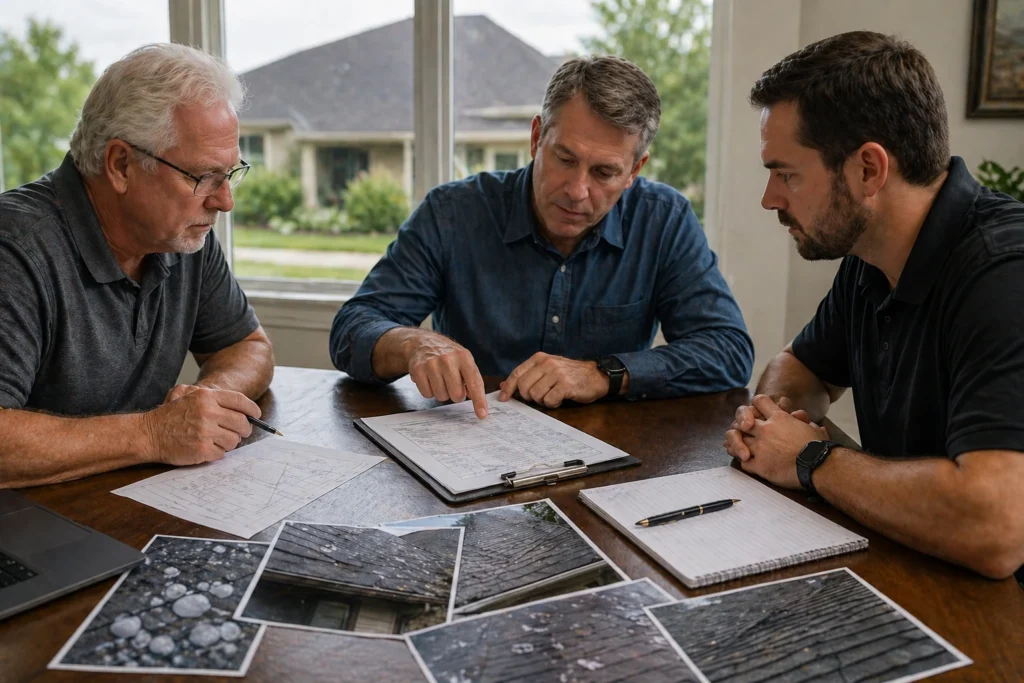
It’s frustrating. Sometimes shocking. You file a claim expecting support then you get a denial. If you’re searching for What to Do If Your Hail Claim Was Denied in Texas, you’re already ahead of most homeowners. Many people stop at the denial. They assume the insurance company made the final call. They move on. They absorb the loss.
That’s the wrong move. A denial is not the end of your claim. In many cases, it simply reflects an incomplete inspection, limited documentation, or a narrow interpretation of your policy. I’ve seen homeowners walk away from $15,000–$40,000 in coverage because they didn’t challenge the initial decision. And I’ve seen others take the exact same denial, follow a structured process, and get full roof replacements approved.
The difference is strategy. Homeowners in Pearland deal with the same storms, the same hail patterns, and the same insurance tactics. What separates outcomes isn’t luck. It’s how the claim is built after the denial. Let’s walk through exactly what to do next.
Why Hail Claims Get Denied in Texas
Before you fight a denial, you need to understand it. Insurance companies don’t deny claims randomly—they justify them using policy language and inspection findings.
Most Common Reasons for Denial
- “Damage not caused by hail”
- “Wear and tear or deterioration”
- “Insufficient damage to warrant replacement”
- “Damage is cosmetic only”
- “Claim filed outside policy timeframe”
- “Lack of supporting documentation”
At first glance, these reasons sound definitive. But in reality, they’re often subjective.
What’s Happening Behind the Scenes
Insurance adjusters are trained to evaluate quickly. They may only spend 20–40 minutes inspecting an entire roof. That’s not always enough time to catch subtle or slope-specific damage.
They might:
- Miss hail hits that only appear under certain lighting
- Overlook soft metal indicators that confirm storm impact
- Fail to test multiple slopes thoroughly
- Default to “wear and tear” when damage isn’t obvious
That first inspection shapes the entire claim. If it’s incomplete, your denial is built on a weak foundation.
Step 1: Break Down Your Denial Letter
Start here. Always. Don’t skim your denial letter. Read it line by line. This document tells you exactly what the insurance company is relying on.
What to Look For
- Specific reason for denial (not just general language)
- References to policy exclusions
- Any mention of inspection findings
- Statements about “cause of loss”
If the explanation feels vague or overly broad, that’s a sign the claim wasn’t fully evaluated.
Common Denial Language Decoded
| Denial Statement | What It Often Means |
| Wear and tear | They’re avoiding storm liability |
| No storm damage | Inspection missed or overlooked evidence |
| Cosmetic only | They’re minimizing payout scope |
| Insufficient damage | They didn’t perform detailed testing |
Your job isn’t to argue emotionally. Your job is to challenge these conclusions with better evidence.
Step 2: Rebuild Your Documentation from the Ground Up
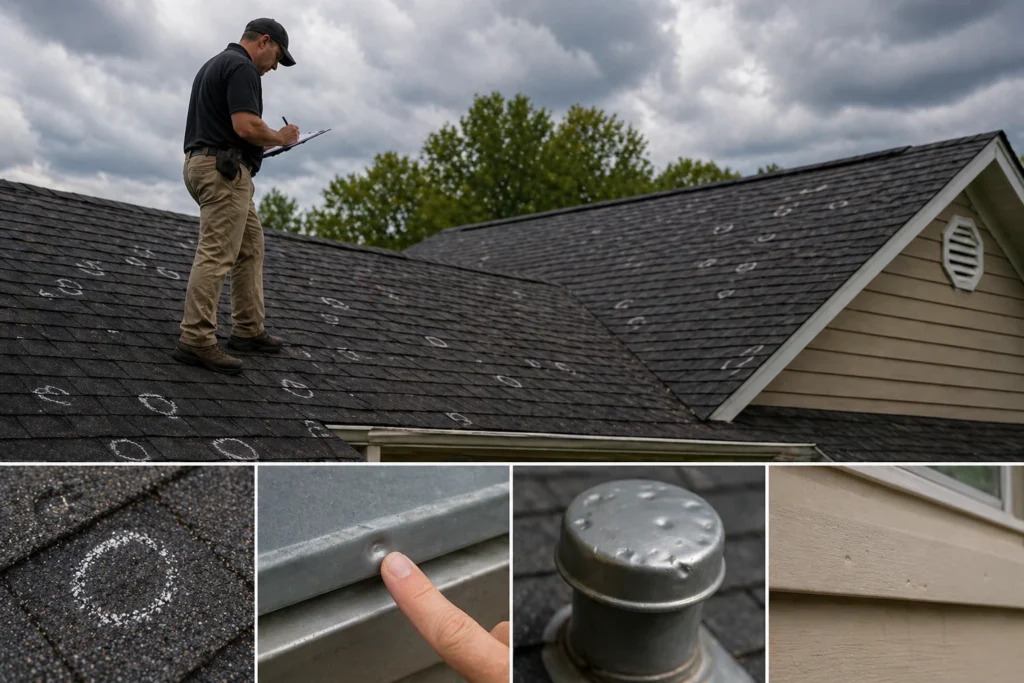
This is where claims are won or lost. If you’re trying to understand What to Do If Your Hail Claim Was Denied in Texas, the answer almost always starts with documentation. Most homeowners take a few photos and call it a day. That’s not enough. Here’s the truth: mastering How to Document Hail Damage for an Insurance Claim is what separates denied claims from approved ones.
What Strong Documentation Includes
- All roof slopes (front, back, sides)
- Close-up hail impact marks
- Soft metals (vents, flashing, gutters, downspouts)
- Window screens and AC units
- Interior damage (ceilings, walls, attic)
The Three-Layer Photo Method
- Wide shots – Show full roof sections
- Mid-range shots – Show damage patterns
- Close-ups – Show individual impacts
This approach builds a visual narrative that’s hard to dispute.
What Most Homeowners Miss (And Why It Matters)
Even solid claims get denied because critical elements are overlooked.
Commonly Missed Evidence
- Interior water intrusion
- Damaged flashing or ridge caps
- Soft metal denting (key hail indicators)
- Matching issues (discontinued materials)
- Local building code requirements
Insurance companies don’t fill in the gaps for you. If it’s not documented, it doesn’t exist in their eyes.
Step 3: Get a Professional Roof Inspection
This step changes everything. A professional inspection is not the same as an insurance inspection. It’s deeper, more methodical, and designed to identify every instance of damage.
What a Proper Inspection Includes
- Test squares on each slope
- Hail hit counts per area
- Detailed photo documentation
- Written damage report
- Replacement justification
Professionals also understand how to document damage in a way that aligns with insurance standards. Homeowners in Pearland who get second inspections often uncover significant damage that was missed initially. That new evidence becomes the foundation of a successful dispute.
Step 4: Request a Re-Inspection (The Right Way)
Once you have better documentation, it’s time to go back to the insurance company.
How to Do It
- Submit a written request
- Attach your new documentation
- Reference the original denial reasons
- Request a second inspection
What to Avoid
- Emotional language
- Accusations
- Long explanations
Keep it simple. Keep it factual. Let the evidence speak.
Step 5: File a Supplement Not a New Claim
This is one of the most misunderstood parts of the process. You don’t start over. You correct what was missed.
Hail Damage Claim Supplements: What Carriers Miss in Their Scope
A supplement adds overlooked items to the original claim.
Typical Missing Items
- Underlayment replacement
- Flashing components
- Drip edge
- Vent replacements
- Labor adjustments
- Waste factors
Why Supplements Work
Insurance estimates are often incomplete. Supplements bring them up to real-world standards. Professionals use estimating software like Xactimate to create line-by-line scopes that insurance companies recognize and respect.
Step 6: Know Your Rights as a Texas Policyholder
You’re not powerless. Texas law gives you options.
Your Key Rights
- Right to dispute claim decisions
- Right to request appraisal
- Right to fair and timely claim handling
The Appraisal Clause Explained
If you and your insurer disagree on value, appraisal can resolve the dispute.
It involves:
- Your appraiser
- Their appraiser
- A neutral umpire
Think of it as a structured system where each component must interact correctly—similar to how a complex mathematical concept like Fourier transform breaks down signals into fundamental components to reveal underlying patterns. Insurance claims work the same way when broken down properly, the truth becomes much clearer.
Step 7: What to Do If Your Hail Claim Was Denied in Texas (Full Strategy)
Let’s bring it all together.
If you’re serious about What to Do If Your Hail Claim Was Denied in Texas, follow this system:
- Analyze denial letter
- Strengthen documentation
- Get professional inspection
- Request re-inspection
- Submit supplement
- Escalate if needed
This process works because it replaces weak evidence with strong evidence.
Step 8: Public Adjuster vs. Insurance Adjuster for Hail Claims in Texas

Representation matters more than most people realize.
Key Differences
| Public Adjuster | Insurance Adjuster |
| Works for you | Works for insurer |
| Maximizes payout | Controls cost |
| Builds detailed claim | Reviews existing claim |
When Hiring a Public Adjuster Makes Sense
- Your claim was denied
- Damage is complex
- You lack time to manage the process
- Negotiations have stalled
Homeowners in Pearland who bring in experienced representation often see stronger settlements and faster resolutions.
Step 9: When Legal Action Becomes Necessary
Sometimes, escalation is unavoidable.
Signs You May Need an Attorney
- Repeated denials despite strong evidence
- Policy misinterpretation
- Delays without explanation
- Suspected bad faith handling
What Legal Action Does
It changes the dynamic. It introduces accountability. But it also increases complexity. Always weigh cost vs. benefit.
Common Mistakes That Kill Hail Claims
Avoid these at all costs:
- Accepting denial too quickly
- Weak or disorganized documentation
- Waiting too long to act
- Hiring inexperienced contractors
- Not understanding policy terms
Each of these mistakes reduces your leverage.
Real-World Scenario: Same Storm, Different Outcome
Let’s make this real.
| Claim A | Claim B |
| 15 random photos | 100+ structured photos |
| No interior proof | Interior damage documented |
| No inspection report | Full professional report |
| Denied | Approved |
Same storm. Same neighborhood. Different outcome. That’s the power of structure.
Timeline: What Happens After a Denial
| Stage | Timeframe |
| Denial review | 1–3 days |
| Documentation rebuild | 3–7 days |
| Re-inspection | 1–2 weeks |
| Supplement review | 1–3 weeks |
| Negotiation | 2–6 weeks |
This isn’t instant. But it’s predictable if you follow the process.
Final Thoughts: Turning a Denial Into a Win
Here’s the truth. A denial feels final. It isn’t. It’s just incomplete. If you follow the right steps, build the right documentation, and approach the process strategically, outcomes change. So if you’re dealing with What to Do If Your Hail Claim Was Denied in Texas, don’t stop where most homeowners do.
FAQs
Yes, you can request a re-inspection or submit new evidence to reopen your denied hail claim.
Timelines vary by policy, but acting within days or weeks is best to avoid complications.
The most common reason is the insurer claiming the damage is due to wear and tear, not hail.
No, it’s usually better to supplement or dispute the existing claim rather than starting over.
Yes, a qualified contractor can provide inspections, documentation, and evidence to support your dispute.
It can be, especially if your claim is complex or the insurer is not responding to new evidence.
A supplement is an update that adds missed damage or costs to your original insurance estimate.
Disputing a denial itself typically does not impact your rates, but policies can vary.
Clear photos, professional inspection reports, and documented interior damage significantly improve your case.
Yes, if you believe the denial is unfair or in bad faith, you can consult an attorney.