
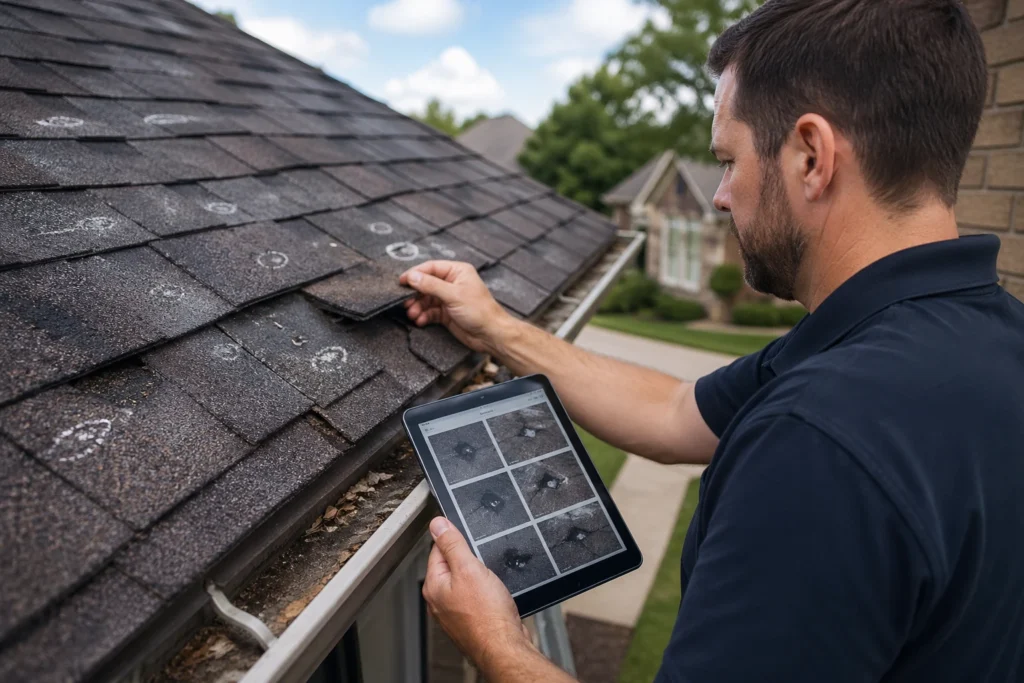
Hailstorms don’t wait. They arrive fast, leave visible dents and invisible problems and then the real challenge begins. Filing a claim sounds simple. It isn’t. The moment you start that process, you’re stepping into a system with rules, timelines, and competing interests. And right at the center of it is one decision that shapes everything: Public Adjuster vs. Insurance Adjuster for Hail Claims in Pearland.
That choice determines how your damage is documented, how your estimate is written, and how aggressively your claim is negotiated. In places like Pearland, where storms hit hard and humidity complicates roofing systems, getting this decision right can mean the difference between a partial repair and a full restoration. Let’s break it down clearly, practically, and without fluff.
What Is a Public Adjuster?
A public adjuster is your representative in the claims process. They work for you. That’s not a small detail it’s the entire point. Licensed by the state of Pearland, public adjusters are trained to evaluate damage, prepare detailed estimates, and negotiate directly with insurance companies. Their job is to make sure nothing is missed and everything is accounted for. They don’t rush. They build.
Core Responsibilities of a Public Adjuster
- Perform a comprehensive property inspection
- Identify both obvious and hidden hail damage
- Document findings with structured photo evidence
- Create a detailed estimate using Xactimate
- Submit and manage all claim-related documentation
- Negotiate settlement amounts with the insurer
- File supplements when additional damage is identified
They’re not just inspecting your roof. They’re constructing a claim file designed to hold up under scrutiny.
What Is an Insurance Adjuster?
An insurance adjuster represents the insurance company. Their role is to evaluate your claim from the insurer’s perspective.
They may be:
- Staff adjusters (direct employees of the insurance company)
- Independent adjusters (contracted during high-volume periods, like after major hailstorms)
Regardless of type, their responsibility is consistent: assess damage and control claim costs within policy guidelines.
Core Responsibilities of an Insurance Adjuster
- Conduct an initial inspection
- Determine whether damage is covered
- Prepare an estimate for repairs
- Approve or deny portions of the claim
- Close the claim efficiently
They are trained professionals. But they are not your advocate.
Public Adjuster vs. Insurance Adjuster Key Differences
Here’s a clear comparison of Public Adjuster vs. Insurance Adjuster for Hail Claims in Pearland:
| Feature | Public Adjuster | Insurance Adjuster |
| Represents | Homeowner | Insurance Company |
| Primary Goal | Maximize claim payout | Minimize claim cost |
| Payment Structure | % of settlement | Salary or contract |
| Inspection Depth | Thorough and detailed | Often time-limited |
| Documentation | Extensive and strategic | Basic to moderate |
| Negotiation Role | Advocates for policyholder | Protects insurer |
This isn’t about right or wrong. It’s about perspective.
How Hail Claims Work in Pearland
At a glance, the process looks simple. In reality, each step carries weight.
Standard Claim Flow
- Storm causes damage
- Homeowner files claim
- Insurance adjuster inspects property
- Estimate is created
- Initial payment is issued
- Additional findings may trigger supplements
The problem? Most claims don’t get fully scoped in Step 3. That’s especially true in regions like Pearland, where wind-driven hail impacts different roof slopes unevenly. Damage can be subtle. Granule loss, bruising, and soft metal dents often go unnoticed unless someone is specifically looking for them. And if it’s not documented, it doesn’t exist in the claim.
Where Insurance Adjusters Commonly Fall Short
This isn’t about blaming individuals. It’s about understanding system limitations. Insurance adjusters often handle dozens of claims per week. Time is tight. Efficiency matters. But speed creates blind spots.
Common Gaps in Insurance Adjuster Inspections
- Limited time on-site (sometimes under 30 minutes)
- Focus on visible damage only
- Missed soft metal impacts (vents, flashing, gutters)
- Lack of interior inspection
- No consideration of future leaks or latent damage
- Minimal documentation for negotiation
These gaps aren’t always intentional. They’re structural. And they affect outcomes.
How Public Adjusters Add Value in Hail Claims
Public adjusters approach claims differently. They slow things down strategically. They treat the claim like a project. Each detail matters.
What They Do Differently
- Conduct multi-angle roof inspections
- Document each slope individually
- Match damage patterns with storm direction
- Identify collateral damage beyond roofing
- Tie every photo to a line item in the estimate
- Build a claim that can be defended
They’re not guessing. They’re proving.
The Reality of Missed Scope and Supplements
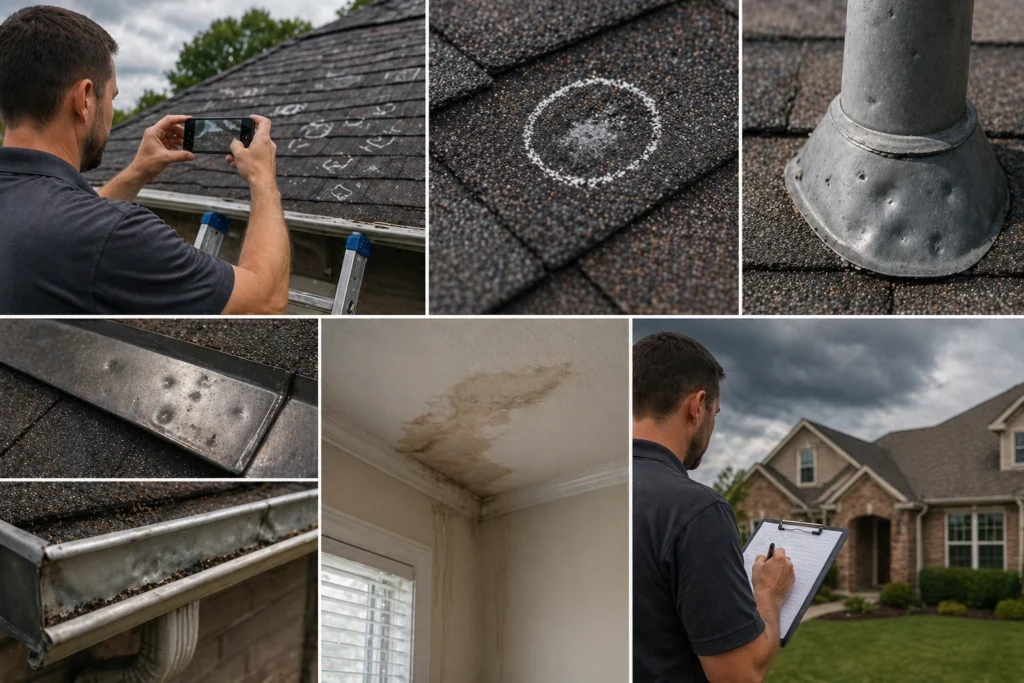
Here’s where claims are often won or lost. Many homeowners don’t realize that the first estimate is rarely the final one. There are often gaps, and those gaps can be corrected through supplements. This is where understanding concepts like Hail Damage Claim Supplements: What Carriers Miss in Their Scope becomes critical.
Commonly missed items include:
- Drip edge installation
- Flashing replacements
- Ridge vent adjustments
- Gutter and downspout damage
- Interior drywall repairs
- Code-required upgrades
These are not upgrades. They are necessary components of a proper repair.
Without supplements, they are frequently excluded.
Cost vs. Benefit Is a Public Adjuster Worth It?
Let’s address the obvious concern: cost. Public adjusters typically charge 5% to 10% of the final settlement. That fee comes from the payout, not upfront.
So the real question is:
Does their involvement increase the claim enough to justify the fee? In many cases, yes.
Situations Where a Public Adjuster Makes Sense
- High-value claims
- Complex or multi-trade damage
- Initial estimate seems low
- Claim has been denied or underpaid
- Homeowner lacks time or expertise
Situations Where It May Not Be Necessary
- Minor cosmetic damage
- Straightforward claims
- Strong initial estimate from insurer
But here’s the reality: most hail claims are not straightforward.
Advanced Claim Strategies Most Homeowners Miss
This is where things get interesting. And valuable. Public adjusters often use strategies that aren’t obvious to homeowners but make a major difference in claim value.
1. Line Item Stacking
Instead of grouping work into a single entry, they break it down into multiple related line items.
2. Trade Separation
Roofing, gutters, interior, and HVAC are scoped separately to justify overhead and profit.
3. Waste Factor Adjustments
Complex roof designs increase material waste. Accurate estimates reflect this.
4. Code Documentation
Local building codes require certain upgrades. These must be included.
5. Photo Mapping
Each photo is tied to a specific estimate line item, reducing disputes.
Think of a claim like a system where each component must align correctly similar to topology studies relationships between connected elements in a structure. When everything is connected properly, the outcome becomes much clearer.
Real-World Scenario Comparison
Let’s compare two outcomes.
Scenario A: Insurance Adjuster Only
- 18 photos taken
- No interior inspection
- Limited roof slope analysis
- Estimate: $10,200
- Outcome: Partial repair approved
Scenario B: Public Adjuster Involved
- 120+ structured photos
- Full interior and exterior documentation
- Detailed Xactimate estimate
- Supplement submitted
- Final payout: $19,800
Same property. Same storm.
Different results. That’s the real-world impact of Public Adjuster vs. Insurance Adjuster for Hail Claims in Pearland.
How to Document Hail Damage for an Insurance Claim
Strong documentation changes everything.
Step-by-Step Guide
- Photograph each roof slope from multiple angles
- Capture close-ups of hail impact marks
- Document soft metals (vents, flashing, gutters)
- Inspect and photograph interior ceilings and walls
- Record storm date and conditions
- Maintain a written damage log
What Good Documentation Does
- Supports your claim
- Speeds up review
- Strengthens negotiation
- Reduces disputes
Documentation isn’t just evidence. It’s leverage.
What to Do If Your Hail Claim Was Denied in Pearland
A denial is not the end.
Common Reasons for Denial
- Insufficient documentation
- Damage labeled as wear and tear
- Policy limitations
- Incomplete inspection
What You Can Do Next
- Request reinspection
- Provide additional documentation
- Hire a public adjuster
- File a supplement
- Use appraisal if necessary
Many denied claims are later approved when properly documented.
Choosing the Right Professional for Your Situation
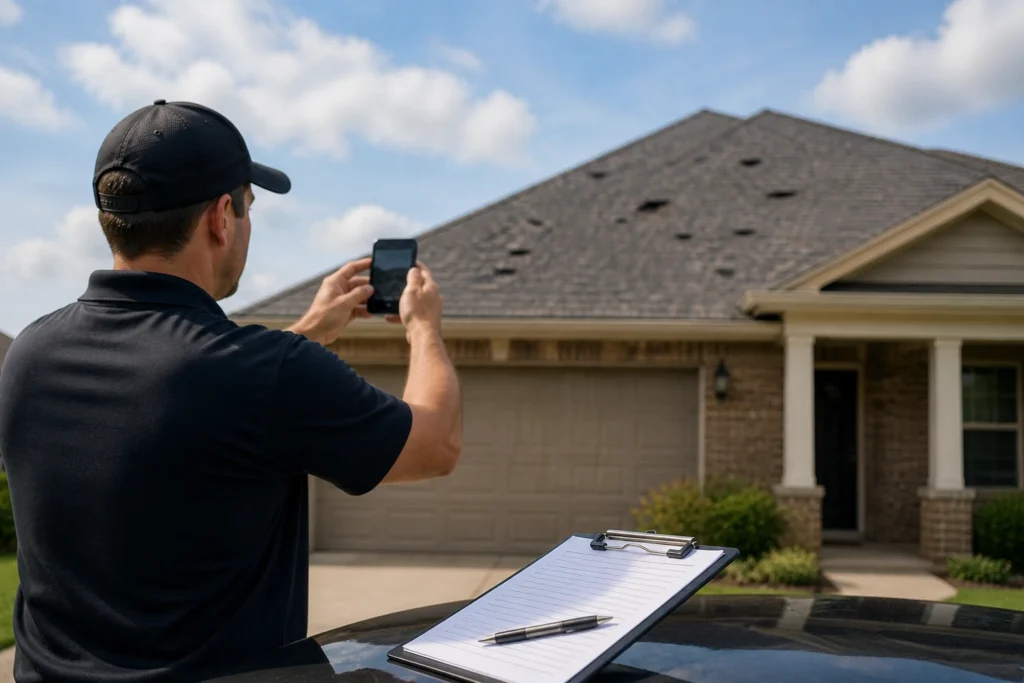
Not every claim requires the same approach.
Ask yourself:
- Is my claim complex?
- Do I trust the initial estimate?
- Do I have time to manage the process?
- Do I want professional representation?
Decision Guide
| Situation | Recommended Approach |
| Minor damage | Insurance adjuster only |
| Moderate claim | Evaluate options |
| Complex claim | Public adjuster recommended |
| Denied claim | Public adjuster strongly advised |
Local Insight: Why This Matters in Pearland
In Pearland, roofing systems face unique stress factors:
- High humidity
- Heat expansion
- Wind-driven hail impact
These conditions increase the likelihood of hidden damage.And hidden damage is what gets missed in fast inspections. That’s why accurate scoping matters here more than most homeowners realize.
Final Thoughts
At its core, Public Adjuster vs. Insurance Adjuster for Hail Claims in Pearland is about representation. One evaluates your claim. The other builds it. One works within the system. The other works to challenge it when needed.
That difference shows up in the details, the documentation, the negotiation and the final number. If your goal is speed, the default process may be enough. If your goal is accuracy and maximum recovery, representation matters. Because in hail claims, what gets documented gets paid. And what gets missed… doesn’t.
FAQs
A public adjuster represents you, while an insurance adjuster represents the insurance company.
No, but they are highly beneficial for complex, high-value, or disputed claims.
They typically charge 5% to 10% of the final settlement amount.
Yes, you can bring one in at almost any stage of the claim process.
They may miss damage, limit scope, or exclude certain items initially.
A supplement adds missed or underpaid items to your original claim.
Most claims take a few weeks to a couple of months, depending on complexity.
Yes, they can reopen, document, and negotiate denied claims effectively.
Not necessarily better documentation often speeds up resolution.
In many cases, yes especially when it leads to a significantly higher payout.