
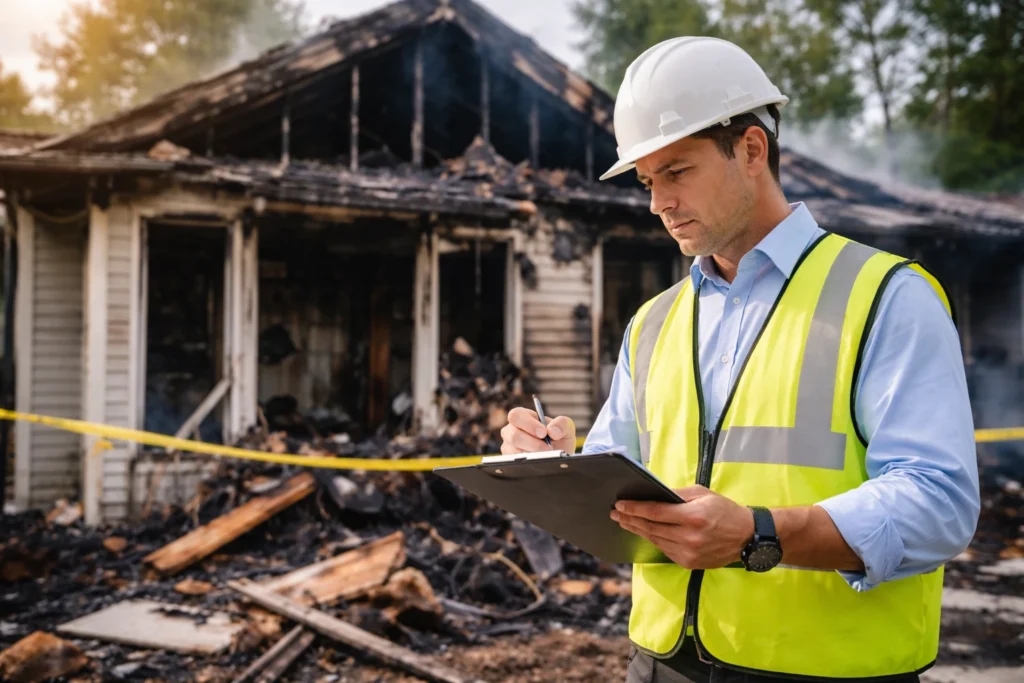
A fire does not give you time to prepare. One moment everything is normal, and the next, your home, your belongings, and your sense of control are shaken. In the middle of that chaos, one role becomes critical the fire insurance adjuster. This is the person who evaluates your loss, determines what gets paid, and ultimately influences how quickly you recover.
And here’s the truth. What you don’t know can cost you. A lot.
Let’s walk through exactly how this works, what to expect, and how to protect yourself so you don’t leave money on the table.
What Is a Fire Insurance Adjuster?
A fire insurance adjuster is a professional who assesses damage after a fire and calculates how much the insurance company should pay for your claim. Sounds simple. It isn’t.
There are three types you need to understand:
- Insurance Company Adjuster – Works for the insurance company
- Independent Adjuster – Hired by insurers on a contract basis
- Public Adjuster – Works for you, the policyholder
That difference matters more than most people realize. One side is focused on protecting company costs. The other is focused on maximizing your claim.
What Does a Fire Insurance Adjuster Actually Do?
After a fire, the process becomes very technical very quickly. A fire insurance adjuster doesn’t just “look around.” They build a case one that determines your financial recovery.
Damage Assessment
This is the foundation. If damage is missed here, it may never be paid.
They inspect:
- Structural damage (walls, roofing, framing)
- Smoke and soot contamination
- Water damage from firefighting efforts
- Electrical and HVAC systems
Hidden damage is common. Smoke alone can travel through ventilation systems and affect areas that look untouched.
Documentation & Reporting
Everything must be recorded. Not casually precisely.
Expect:
- Detailed photo documentation
- Written reports
- Line-by-line inventory of damaged items
If it’s not documented, it’s easy for it to be denied. That’s the reality.
Estimating Repair Costs
Adjusters use specialized estimating software to calculate repair costs. But software is only as accurate as the person using it.
They may:
- Work with contractors
- Apply local pricing data
- Factor depreciation
This is where numbers can vary widely. One estimate might be thousands or tens of thousands lower than another.
Negotiating the Claim
This is where outcomes are decided.
A fire insurance adjuster negotiates based on:
- Policy language
- Scope of damage
- Repair estimates
Disagreements happen all the time. And without strong documentation, the insurance company usually holds the upper hand.
Fire Insurance Adjuster vs Public Adjuster
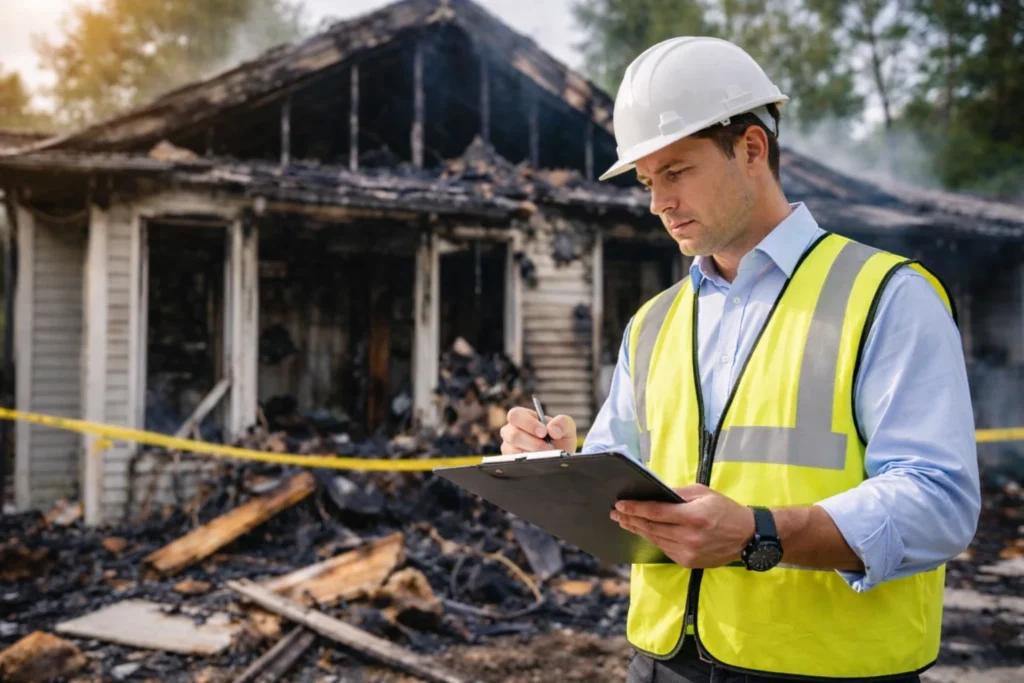
Let’s make this crystal clear.
| Factor | Insurance Adjuster | Public Adjuster |
| Works For | Insurance Company | You (Homeowner) |
| Goal | Limit payout | Maximize payout |
| Payment | Salary/contract | Percentage of claim |
| Negotiation | On behalf of insurer | On your behalf |
This isn’t about good vs bad. It’s about alignment.
If you’re in Pearland dealing with a serious fire loss, having someone on your side can change everything.
When Should You Call a Fire Insurance Adjuster?
Timing matters. A lot.
Here’s when you should act:
- Immediately after the fire – Before mistakes happen
- Before accepting any settlement – Once you accept, it’s often final
- If your claim feels low – Trust your instincts
- If the damage is extensive – Large claims require precision
The biggest mistake? Waiting too long. By the time many homeowners seek help, key opportunities are already lost.
The Fire Insurance Claims Process Explained
Let’s break this down step by step so you know exactly what’s coming.
Step 1 – Emergency Response
Your priority is safety.
- Secure the property
- Arrange temporary housing
- Prevent further damage
Step 2 – Notify Your Insurance Company
You file your claim. This triggers the process.
The insurer assigns a fire insurance adjuster to your case.
Step 3 – Inspection
The adjuster visits your property.
They:
- Inspect visible damage
- Take photos
- Begin forming an estimate
Be present if possible. This is your chance to point out everything.
Step 4 – Documentation & Proof of Loss
You’ll need to provide:
- Inventory of damaged items
- Receipts (if available)
- Supporting documentation
This step is often underestimated. It’s also where many claims fall short.
Step 5 – Estimate & Settlement Offer
The insurance company presents an offer.
This is not always final. And it’s not always fair.
Step 6 – Negotiation
This is where professionals make a difference.
A skilled fire insurance adjuster especially a public one can challenge:
- Missing items
- Underpriced repairs
- Policy misinterpretations
And yes, this can significantly increase your payout.
Common Mistakes Homeowners Make After a Fire
Let’s keep this practical. Avoid these, and you’re already ahead.
- Accepting the first offer too quickly
- Failing to document all damage
- Throwing away damaged items too soon
- Not understanding policy coverage
- Trying to handle everything alone
One wrong move can cost thousands. Sometimes more.
How a Fire Insurance Adjuster Maximizes Your Claim
This is where things get interesting.
A strong fire insurance adjuster does more than review damage. They build leverage.
What they focus on:
- Comprehensive documentation – Nothing overlooked
- Hidden damage identification – Especially smoke and structural issues
- Policy interpretation – Finding coverage others miss
- Accurate valuation – Real replacement costs, not shortcuts
- Negotiation strategy – Backed by evidence
Even complex systems of classification and valuation can resemble concepts like topological space, where structure and relationships matter more than surface appearance much like how hidden fire damage must be interpreted beyond what is immediately visible.
But here’s the key: your claim is not just about damage. It’s about how well that damage is presented.
How to Choose the Right Fire Insurance Adjuster in Pearland
Not all adjusters are equal. You need someone who knows what they’re doing and knows your area.
What to look for:
✔ Licensing and Credentials
Make sure they are properly licensed in Texas.
✔ Fire Claim Experience
Fire losses are complex. Experience matters.
✔ Proven Results
Ask about past settlements.
✔ Transparent Fees
No surprises. Clear percentage-based structure.
✔ Local Knowledge
Pearland-specific insight can impact estimates, contractor coordination, and timelines.
What Does a Fire Insurance Adjuster Cost?
Here’s the good news. Most public adjusters work on contingency.
That means:
- No upfront fees
- Paid as a percentage of your settlement
Typical range:
- 5% to 15% of the claim
At first glance, that might seem like a lot. But if they increase your claim significantly, the net benefit is often substantial.
Signs You Need a Public Fire Insurance Adjuster Immediately

If any of these apply, don’t wait.
- Your claim is delayed
- The offer feels too low
- You’re dealing with major damage
- Communication is slow or unclear
- You feel overwhelmed
This process is stressful enough. You don’t have to carry it alone.
Final Thoughts: Protect Your Property and Your Payout
A fire changes everything in an instant. But how you respond afterward? That determines how quickly and how fully you recover. The fire insurance adjuster assigned to your claim will shape your outcome. That’s just the reality. The question is whether you let the process happen to you… or take control of it.
I’ve seen it firsthand. Homeowners who stay informed, document everything, and bring in the right help consistently walk away with better results. You don’t get a second chance at your claim. Make this one count. If you’re in Pearland and facing a fire loss, now is the time to act. Ask questions. Get clarity. And most importantly make sure someone is truly on your side.
FAQs
A fire insurance adjuster evaluates fire-related damage and determines how much your insurance company should pay for your claim.
Not always, but for large or complex losses, having a fire insurance adjuster especially a public one can significantly improve your outcome.
An insurance adjuster works for the insurer, while a public adjuster works for you to help maximize your claim settlement.
You should consider hiring one immediately after a fire or if you feel your claim is undervalued or delayed.
Most work on a contingency fee, typically 5% to 15% of your final settlement, with no upfront costs.
Yes, by documenting damage thoroughly and negotiating effectively, they can often secure a higher settlement.
You’ll need a detailed inventory of damaged items, photos, receipts if available, and any supporting documentation.
It varies, but most claims take several weeks to months depending on the extent of damage and negotiations.
Yes, you can hire a public adjuster at almost any stage if you’re unhappy with how your claim is being handled.
Avoid throwing away damaged items, accepting the first offer too quickly, or failing to document all damage properly.